Which methodology is best suited for offshore software development?
Offshore software development is carried out with the ultimate aim to reduce the overall cost and for that an effective method can be used from the available methods. Having different software development life-cycle methodologies, choosing one which fits your business turns your revenue-up. Each project should be dealt with different,flexible methods and the methodologies should be wisely chosen to ensure project success.
The process of developing software product includes: Collect the requirements of the client, then research on their specification,outline an architecture, design and construct software based on it. The software is tested and debugged to rectify the errors. Software deployment is carried out and ultimately the software developed is effectively maintained. Several models exist for the software development life-cycle and it’s the developer decision to choose the one which is apt, sometimes the combination of the models is needed.
The following are the certain Software Models:
- Waterfall Model
- Agile Model
- Spiral Model
- Rapid Application Development (RAD)
- Iterative and Incremental development
- Crystal Methods
- Dynamic Systems Development Model (DSDM)
- Extreme Programming (XP)
- Joint Application Development (JAP)
- Rational Unified Process (RUP)
- Systems Development Life Cycle (SDLC)
- Scrum
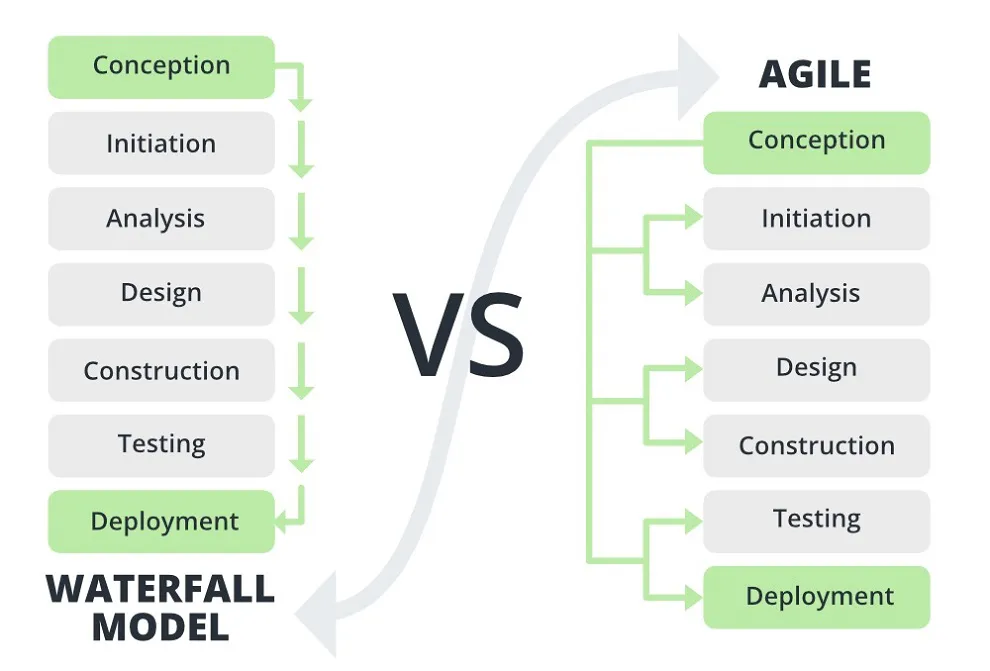
Among the various development methodologies, mainly traditional one i.e. waterfall method and agile development methodology is generally followed.
Waterfall Model
The Waterfall model is the traditional software development life cycle hence it’s a.k.a traditional method. In this passé method, each stage is carried out with well-defined perspective since no turning-back is possible once the stage is executed. So it’s following a downwards sequential path which is similar to a waterfall. This classic method is rigid and linear.
The criticisms behind this method are:
- Needs to go back and execute the entire program once if any glitch is found.
- Since it’s a defined method, it’s difficult to change according to user needs once it’s implemented.
- Considered to be an inefficient method.
- High cost since the product is tested at very end so if any bug is seen the entire code has to re-write.
- Only one main release of the product.
- Inflexible and Slow method
Agile Model
This iterative development methodology refines each stage of process. The change at any stage of development life cycle is possible as per client needs and this makes the model user-friendly. This method covers issues at the earliest without waiting at the end for a complete product development. This process requires real-time communication and it needs only very little written documentations.
Certain advantages of this model are:
- Reduce Overheads
- Empirical method
- Subjected to changes even though software is delivered
- Bugs are eliminated at the development stage itself
- Working model available at any time of the development life cycle
- Testing and deployment is carried out at each stage of the project not at the very end
Whatever be the model, the one which improves productivity and quality is required. One method used for a particular project may not fit for another project and each method has its own pros and cons. So that either an individual methodology can be followed or a combination of several models can be effectively utilized.